Table of Contents
- Why new writers make common grammar mistakes
- Check your subject-verb agreement
- Use a consistent tense
- Simplify complex sentence structures
- What not to do
- How to stop it happening again
- Frequently asked questions
- Can I use grammar tools to fix everything?
- Why is my grammar inconsistent?
- How long should a sentence be?
- Is it safe to ignore minor grammar rules?
- What happens if I make too many mistakes?
- Final Thoughts
Reviewing your own drafts for Common Grammar Mistakes New Writers Make (and How to Fix Them) is the most effective way to improve clarity and professional tone. The most common cause is rushing through the editing phase, which leaves behind small errors that distract from your message. If you’re writing for a client, take extra time to check the flow; if you’re writing for a personal blog, you can be slightly more relaxed, but accuracy remains key.
Why new writers make common grammar mistakes

Most writing errors stem from two main issues: cognitive overload and a lack of systematic proofreading. This is a common trap for new writers who try to edit while writing.
Another factor is the influence of informal communication, such as texting or social media. These platforms encourage shorthand and loose grammar, which can bleed into professional work without you noticing. This varies by experience, client, and market, meaning what works for a casual newsletter might fail in a corporate report. If you’re struggling with complex sentence structures, simplify them to avoid errors. If you find yourself overusing passive voice, switch to active verbs to sharpen your prose. You don’t need to be a linguist to catch these; you just need to slow down and read your work out loud. This simple habit helps you hear the rhythm of your sentences and identify where the grammar feels forced or incorrect.
Check your subject-verb agreement
This fix is for writers who struggle with inconsistent number usage in their sentences. Subject-verb agreement means that a singular subject needs a singular verb, and a plural subject needs a plural verb. For example, “The team is working” is correct, while “The team are working” might sound wrong in US English. If you have a long, complex sentence, it’s easy to lose track of the main subject.
To fix this, identify the core noun and its corresponding action. If the sentence is long, strip away the descriptive phrases to see if the basic structure holds up. If you see “The box of pens are on the desk,” you can easily spot that “box” is singular, so it should be “The box of pens is on the desk.” You can verify these rules by checking the Purdue Online Writing Lab grammar guide. If you’re unsure about a specific case, look for the main subject before the prepositional phrase. This is a simple technique that works for almost any sentence length.
Use a consistent tense
This fix is for writers who jump between past and present tense within the same paragraph. A common mistake is starting a story in the past tense and accidentally shifting to the present tense midway through. This confuses the reader and makes the writing feel disjointed.
To correct this, choose one tense and stick with it throughout the entire section. If you’re describing a process, the present tense is usually best. If you’re telling a story or reporting on an event, use the past tense. To check your work, highlight all your verbs in one paragraph and see if they match. If you find a mix, decide which tense serves the narrative better and rewrite the inconsistent sentences. This is a trade-off: while you might want to use the present tense for impact, the past tense is often more stable for long-form content. If you’re writing a technical manual, keep the tense uniform to ensure the instructions are clear and easy to follow for the user.
Simplify complex sentence structures
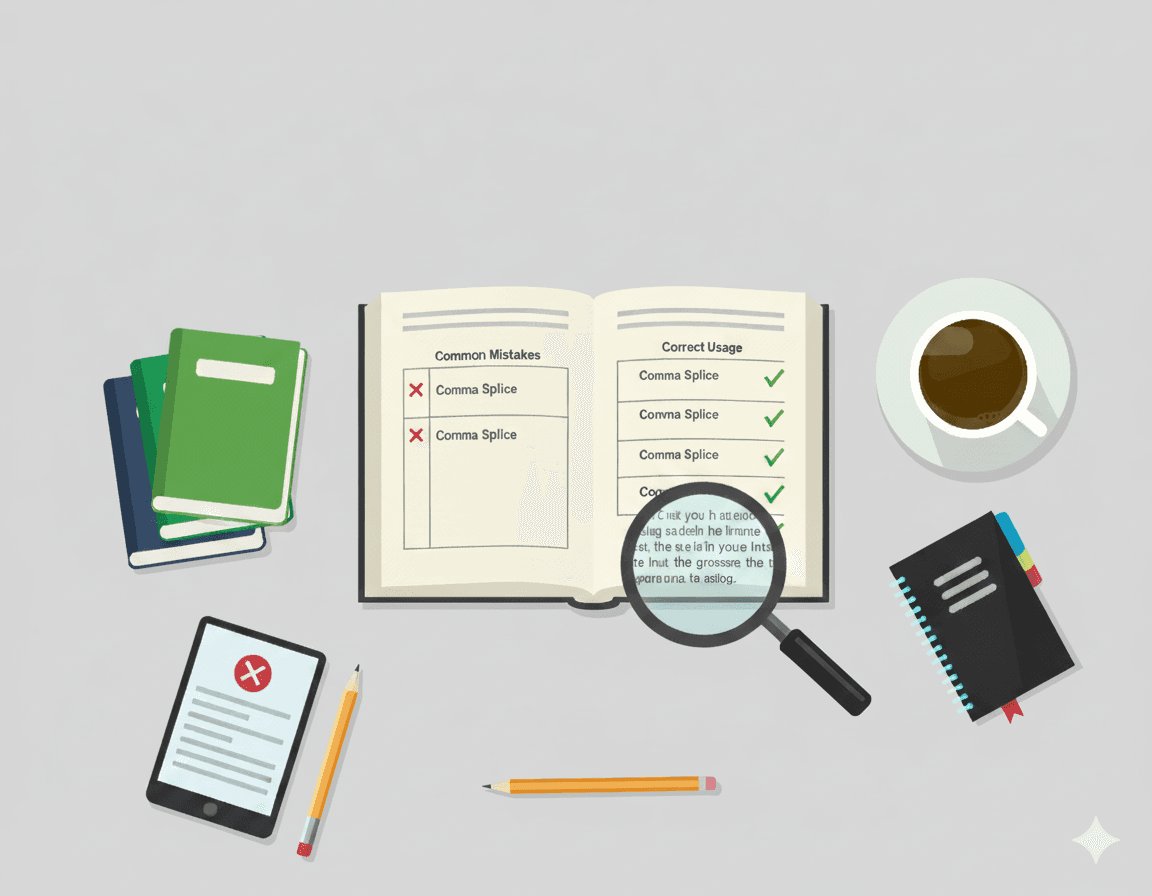
This fix is for writers who use too many clauses in one sentence. Long, winding sentences often lead to misplaced modifiers or comma splices. It’s worth the extra effort to break these down into two or three shorter, punchy sentences. If a sentence has more than two commas, it’s often a sign that it needs to be split.
This isn’t for writers who prefer a highly lyrical or literary style, as breaking up sentences can sometimes change the flow of your prose. However, for most professional and web content, brevity is a strength. If you find your meaning is getting lost, stop and ask yourself if the sentence is trying to do too much. Split it at the natural pause. This creates a clearer path for the reader and reduces the chance of grammatical errors. If you’re unsure, read the sentence aloud. If you run out of breath before you reach the end, it’s too long. This varies by model — check the label of your specific style guide for preferred sentence lengths.
What not to do
- Don’t rely solely on automated spell-checkers, as they often miss context-based errors like “their” versus “there.”
- Don’t edit your work immediately after finishing the draft, as you’ll be too close to the text to see your own mistakes.
- Don’t assume that complex words make you look smarter, as they often lead to misused terms and clunky, difficult sentences.
- Don’t ignore the feedback of others, as outside eyes often catch the errors you have become blind to.
How to stop it happening again
Create a checklist to review your work before you hit publish. Consistent habits are the only way to ensure your writing stays clean and professional.
| If you’re doing this | Do this instead | Why |
|---|---|---|
| Editing while writing | Edit only after finishing | Keeps focus on ideas first |
| Reading on a screen | Print or change the font | Helps you spot tiny errors |
| Using long sentences | Split them at the comma | Improves clarity for readers |
| Ignoring style guides | Use a standard reference | Ensures professional consistency |
Frequently asked questions
Can I use grammar tools to fix everything?
No, automated tools can’t replace a human eye. While they’re great for finding simple spelling or punctuation errors, they often struggle with tone, context, and complex sentence structures. Use them as a first pass, but always perform a manual review to ensure the meaning remains intact. Relying entirely on software will leave you missing subtle errors that affect your credibility.
Why is my grammar inconsistent?
Your grammar is likely inconsistent because your focus shifts while you write. When you’re concentrating on a difficult concept, your brain prioritizes the idea over the mechanics of the sentence. This varies by experience, client, and market, so don’t be discouraged. Regular practice and a structured editing process will help you stabilize your style and reduce these inconsistencies over time.
How long should a sentence be?
A sentence should be as long as it needs to be to convey one clear thought. Aim for an average of fifteen to twenty words per sentence for general content. If you find your sentences frequently exceeding twenty-five words, you’re likely creating a reading barrier. Remember that shorter sentences are almost always easier for non-native English speakers to digest.
Is it safe to ignore minor grammar rules?
It depends on your audience and your goal. If you’re writing a casual social media post, minor errors are usually acceptable and might even make you seem more relatable. However, in professional, academic, or business writing, grammar is a proxy for your attention to detail. If your work contains many errors, readers will assume you didn’t spend enough time on the content.
What happens if I make too many mistakes?
You risk losing your reader’s trust and damaging your professional reputation. If your writing is riddled with errors, people will stop focusing on your message and start focusing on your lack of polish. This is a mistake people actually make, and it costs them the chance to be taken seriously by editors, clients, or employers. Always prioritize quality over speed.
Final Thoughts
The best way to get better is to keep practicing your craft every single day. Don’t worry if you still spot a few errors; that’s just part of the process. Pick one piece you’ve already written and try reading it aloud tonight. You’ll be surprised by how much more you notice.
Related guides